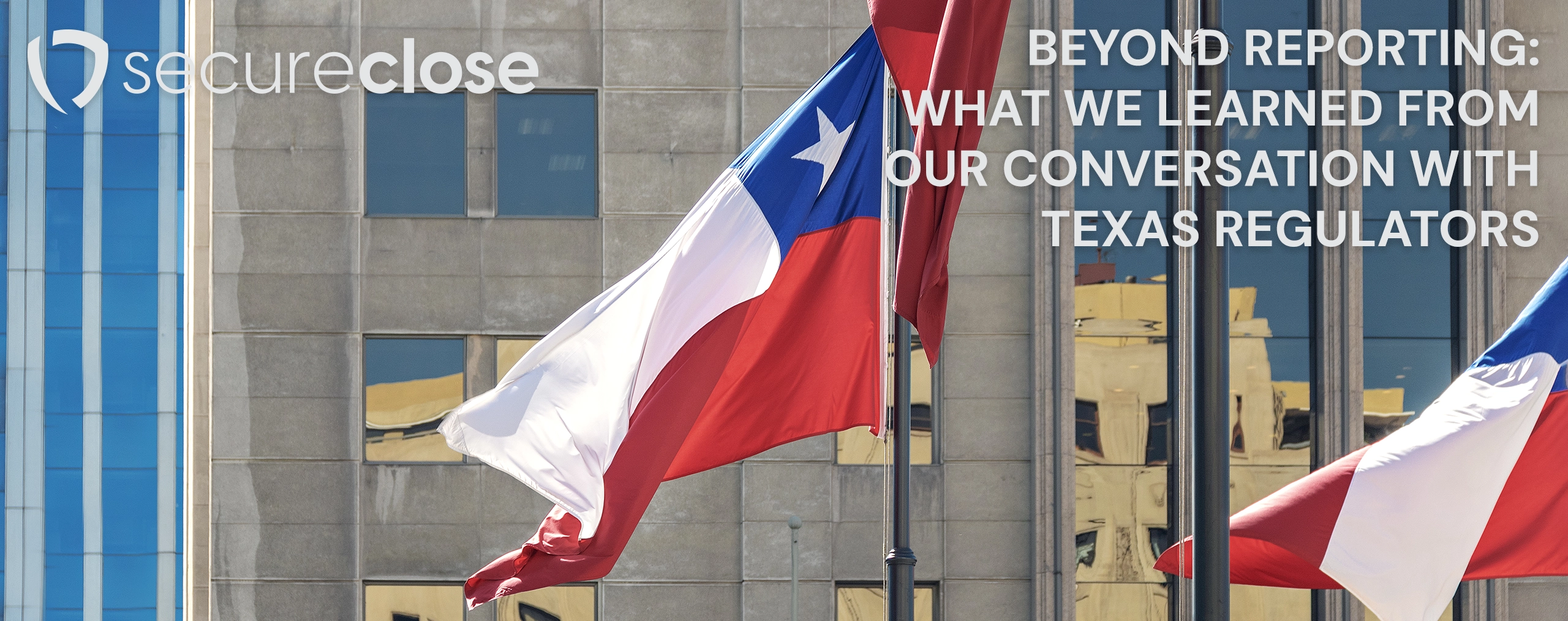
After attending the recent industry discussion regarding Texas’ new annual reporting requirements, the SecureClose team wanted to better understand the bigger picture behind the reporting initiative and what it means for dealers moving forward. Our goal was not simply to understand the mechanics of the report itself, but rather to understand what challenges regulators face when examining dealerships, responding to consumer complaints, and reviewing transaction records years after a sale has occurred. We also wanted to explore whether technology could help Texas dealers meet those expectations more efficiently while creating a better experience for consumers.
One of the first takeaways was that the reporting requirement should not be viewed as a new enforcement program. Rather, it appears to be part of a broader effort to gain better visibility into retail installment contract origination, acquisition, servicing activity, and overall market trends. The information will help regulators better understand activity levels across the industry, identify changes in portfolio volumes, and assist with examination planning. In many ways, the reporting initiative reflects a desire to make oversight more data-driven and better informed rather than relying on assumptions about the marketplace.
Perhaps the most important part of the conversation centered around consumer complaints. While complaints vary by dealership type, a common theme emerged: disputes often arise because consumers believe something different was promised, explained, or disclosed than what actually occurred during the transaction. One of the most common complaints remains some variation of, “They told me something different.” That statement alone highlights one of the biggest challenges facing dealers, consumers, auditors, lenders, and regulators alike. Years after a transaction occurs, everyone is left trying to reconstruct what happened based on memory, handwritten notes, or incomplete records. Regulators acknowledged that having access to recorded transactions and organized digital records would significantly improve the ability to determine what actually occurred and would benefit both consumers and dealers when disputes arise.
That observation aligns closely with the mission SecureClose was built around. Long before annual reporting requirements became a topic of discussion, our focus has been creating defensible digital transaction records that include disclosures, signed documents, consumer acknowledgments, video recordings, audit trails, document history, and long-term storage. The objective is simple: create a complete record of the transaction so there is less reliance on conflicting stories years later. Rather than asking who is right, the transaction itself becomes the source of truth. Regulators also discussed the importance of complete lifecycle documentation during examinations, from the original credit application and supporting documentation through the final disposition of the account. This reinforces the growing importance of organized digital deal jackets that follow the transaction throughout its life.
Another important takeaway was the increasing value of technology that improves transparency and auditability. As the industry continues its transition toward digital transactions, the conversation is no longer simply about electronic signatures. The larger opportunity is creating systems that allow dealers, consumers, lenders, auditors, and regulators to access accurate records when needed. Technologies that preserve disclosures, document acknowledgments, transaction history, ownership transfers, and supporting records can help reduce disputes, simplify examinations, and improve confidence in the transaction itself. During our discussion, it became clear that better documentation is viewed as a benefit to everyone involved—not just regulators.
The same principle applies to ancillary products, service contracts, and Express Informed Consent (EIC). Many of the consumer complaints seen throughout the industry involve misunderstandings about products that were purchased, declined, or explained during the sales process. SecureClose’s approach of documenting disclosures, acknowledgments, and consumer interactions creates a record of what was presented and accepted at the time of sale. This is consistent with the same transparency goals that regulators and consumer advocates have discussed for years. While no system can eliminate every dispute, the ability to clearly demonstrate what was disclosed, explained, and agreed upon creates a stronger foundation for both consumer protection and dealer compliance.
Ultimately, our biggest takeaway from the discussion was simple: transparency protects everyone. Dealers benefit because they can demonstrate what occurred during the transaction. Consumers benefit because they have access to the same records and explanations long after the sale is completed. Lenders and auditors benefit from improved documentation and record retention. Regulators benefit from having better evidence when evaluating complaints or conducting examinations. As reporting requirements evolve and regulatory expectations continue to develop, we believe the future of compliance lies not merely in collecting signatures, but in creating complete, auditable transaction histories that provide clarity, accountability, and confidence for everyone involved.